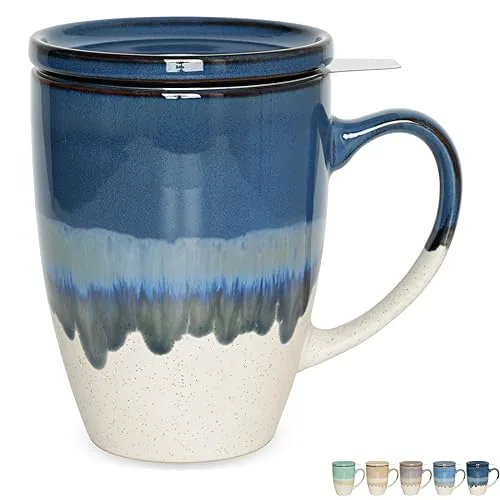
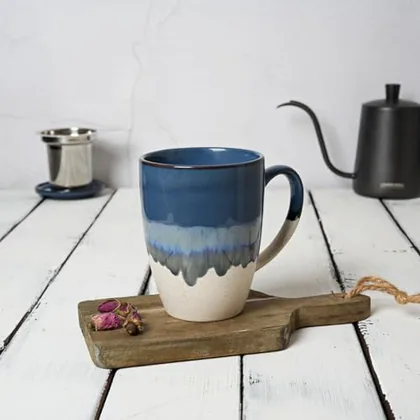
Reactive Tea Infuser Mug with Lid, 13.5 oz, Deep Blue
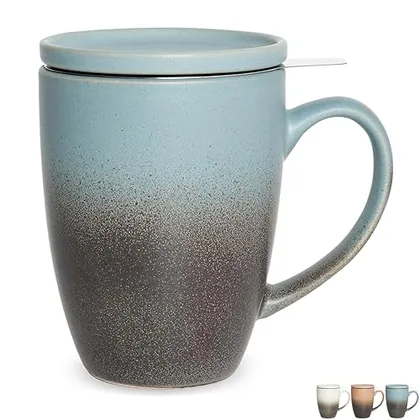
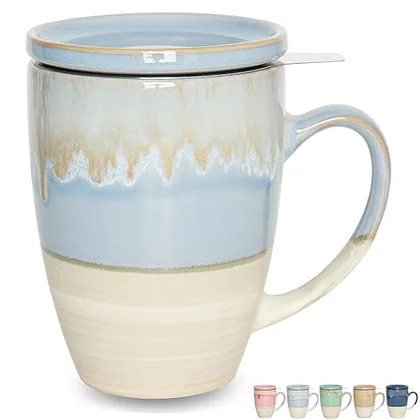
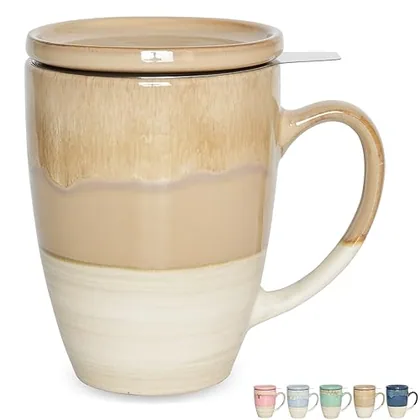
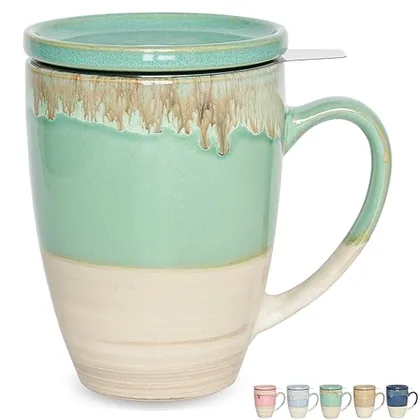
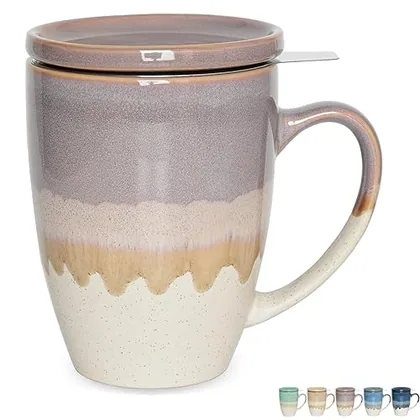
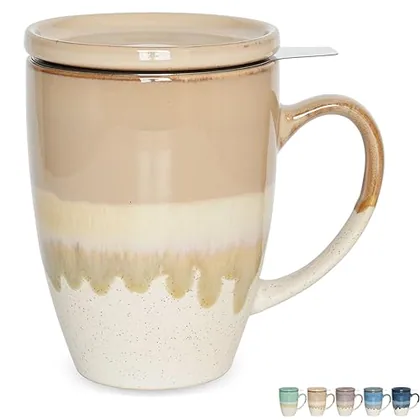
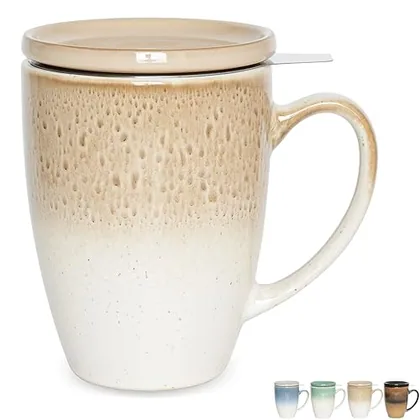
A reactive glaze over stoneware, in deep blue. The kiln finishes the band where the colours meet, so this piece carries the same glaze as the one photographed and a pattern of its own.
Holds 13.5 oz to the brim, sold singly, made for tea, coffee.
Capacity: 13.5 oz
In the range · Tea Infuser Mugs


Piece information
| What | This piece |
|---|---|
| Capacity | 13.5 oz |
| In the box | 1 piece |
| Glaze | Reactive |
| Colour | Deep Blue |
| Body | Glazed stoneware |
| Handle | Large handle |
| Lid | Included |
| Strainer | Included |
| Dishwasher | Safe |
| Microwave | Safe |
| Glaze materials | Lead-free, cadmium-free |
| Height | 4 in |
| Width | 4 in |
| Weight | 1 lb |
| Reference | BM-VZLI |
What the glaze does
Reactive glaze carries mineral oxides that travel while the piece fires. Thickness, kiln position and the shape underneath all pull the boundary between the colours around, so speckles land differently and a fade can sit higher or lower on the next piece.
Care
- 1. Warm it firstRinse a cold piece in warm water before you pour something boiling into it.
- 2. Cloth betweenStack with a cloth in the gap. Glaze is glass, and glass scratches glass.
- 3. Cloth, not wireWarm water and a cloth take off everything a mug picks up in a week.
When stacking glass or ceramic items for storage, place a cushion of soft material between each piece.
the Canadian Conservation Institute
Read 14 August 2026. More on the care and safety page.
More Bosmarlin tea infuser mugs
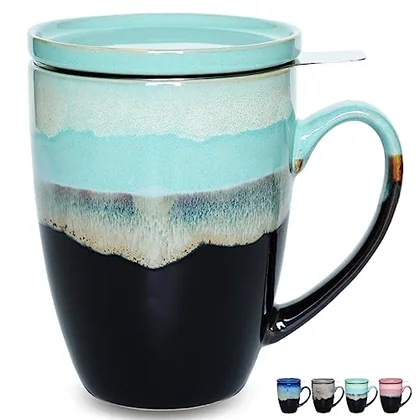
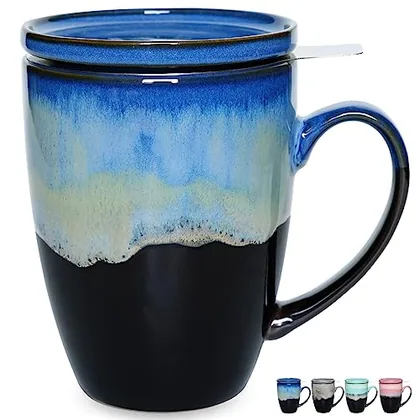
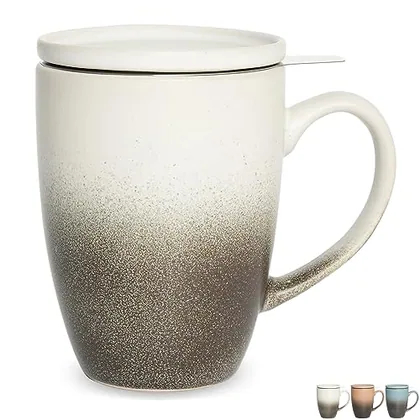
What you are holding
The same eight things are true of every piece we make.
Fired hard
Stoneware fires dense, so it holds heat and shrugs off the knock against a tap.
Glaze that moves
Mineral oxides travel in the heat, so the firing draws the line between colours.
Handles for full mugs
A large mug carries a handle you can put a whole hand through.
Made to stack
Wide feet and even rims, so a shelf of them sits flat.
Dishwasher and microwave
Stated on nearly every piece in the range, and true of the glaze rather than a hope.
No two alike
Speckles land differently and a fade can sit higher or lower on the next piece.
Lead-free and cadmium-free
As stated on the range. The care page spells out what that means.
Sized for real drinks
From 8.5 oz for a cappuccino to 50 oz for a mug of soup.
Stoneware, porcelain and earthenware
Three words used loosely on the same shelf. They describe how hot the clay was fired and how much water it will still absorb, and that difference decides how a piece behaves in a dishwasher, in a microwave and against the edge of a sink.
Stoneware, what we make
- Fired hot and dense, so it absorbs almost no water
- Heavy in the hand and stable on a desk
- Chips are rare, and a chip does not soak up coffee
- Holds heat noticeably longer than a thin cup
Porcelain
- Fired hot too, but thrown thin and light
- Elegant, and far easier to chip on a tap
- Cools faster because there is less body to hold heat
- Usually sold as a full service rather than by the piece
Earthenware
- Fired lower, so the body stays porous
- Depends entirely on its glaze to hold liquid
- A crazed or chipped glaze lets the body absorb
- Lighter and cheaper, and shorter lived in daily use
The three words describe firing temperature and how much water the fired body still takes up. Everything else follows from that.